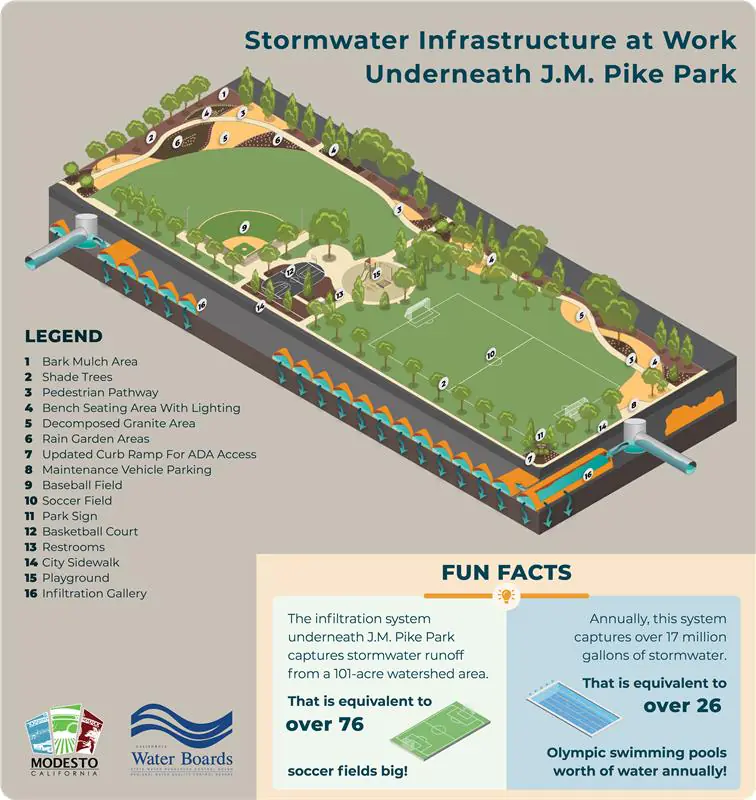
Despite experiencing roughly 260 sunny days a year, the city experienced neighborhood flooding due to failing stormwater infrastructure and excessive wet weather flows to the sanitary sewer system. Instead of undertaking expensive upgrades to both the sewer trunk line and wastewater treatment plant, the city opted for a different approach—an ambitious $31 million dollar capture, treatment, and groundwater recharge system at its 6-acre J.M. Pike Park.
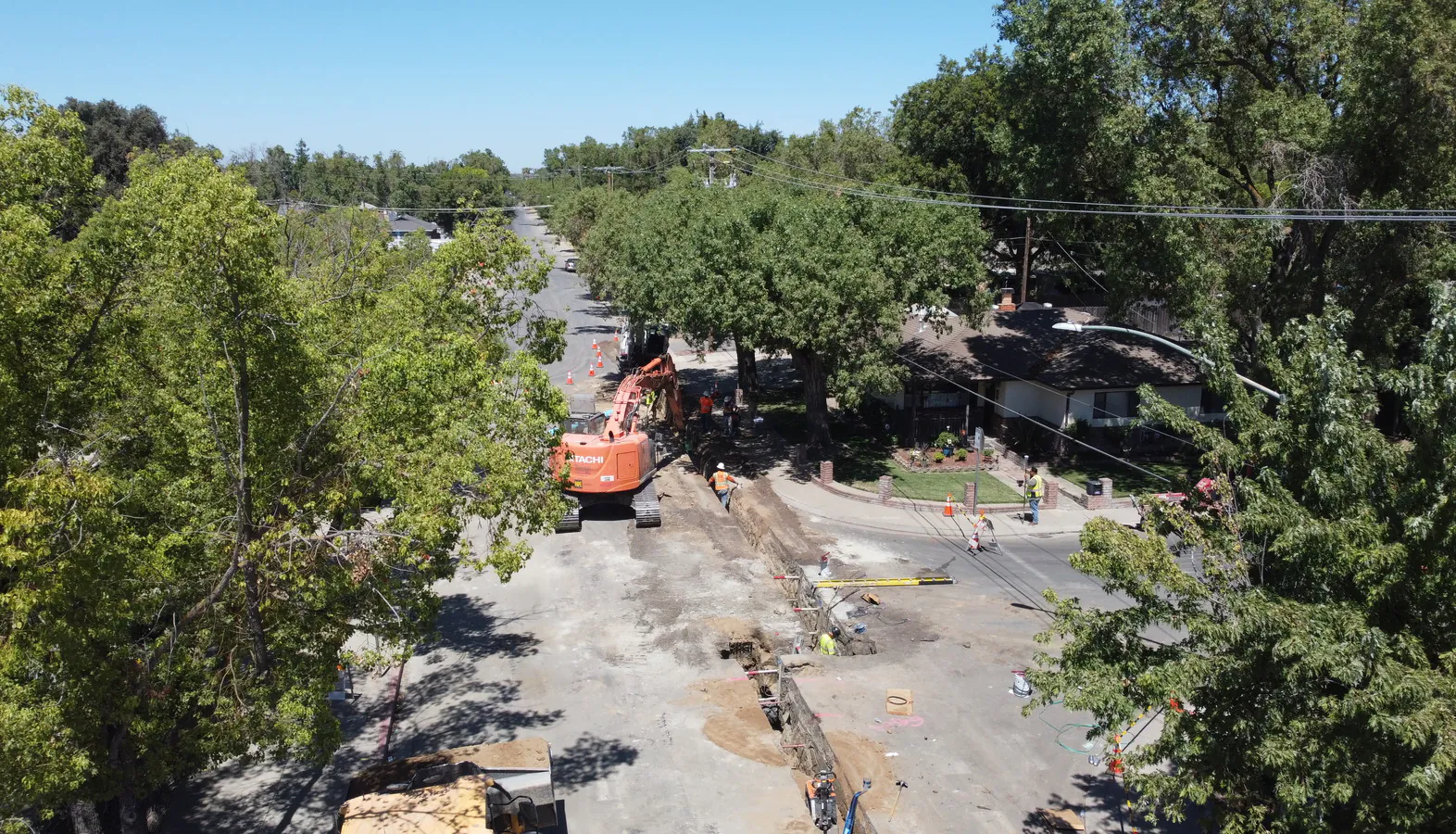
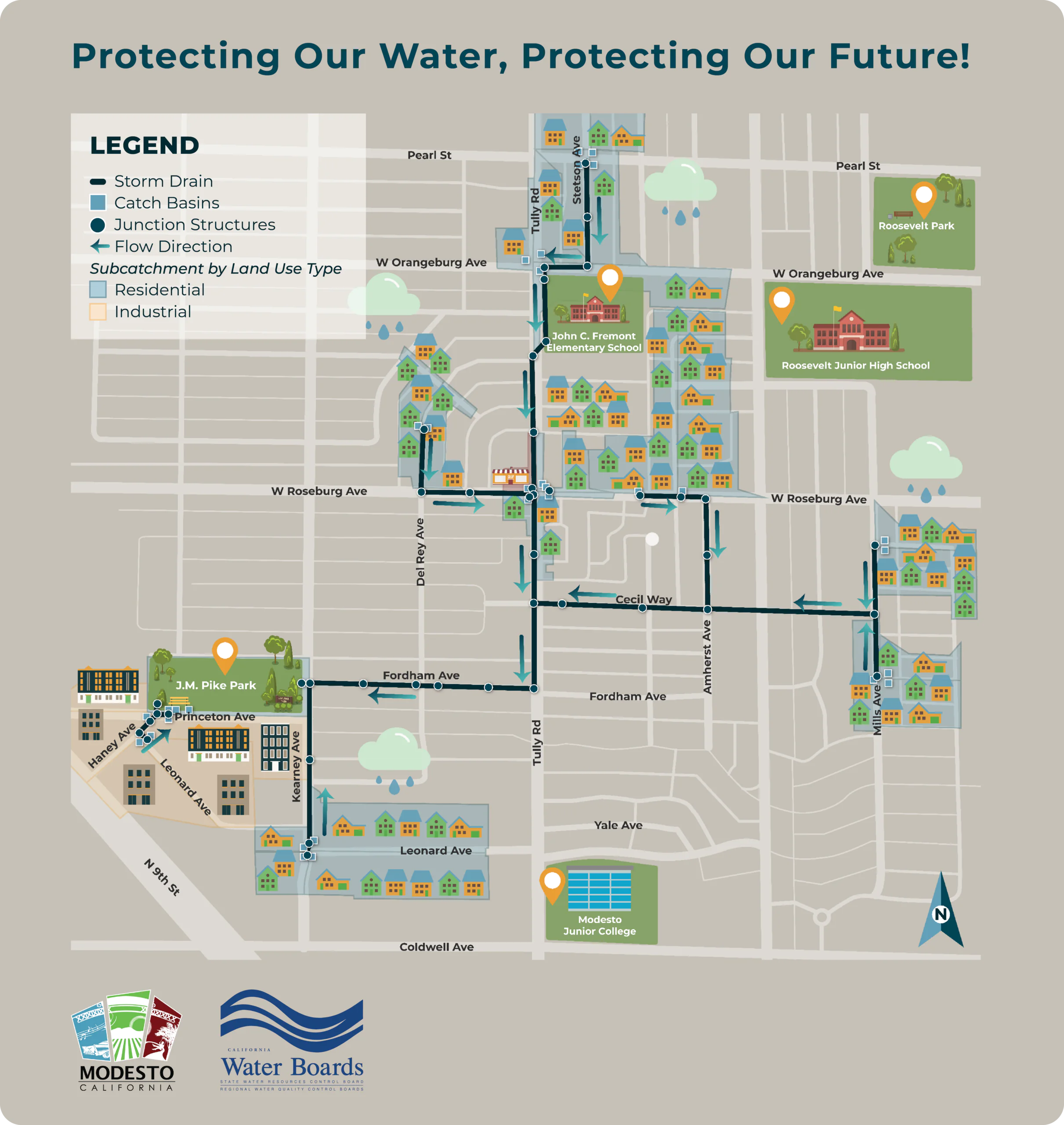
Woodard & Curran partnered with Modesto to reimagine the neighborhood park with a multi-beneficial project that removes stormwater cross connections to the sanitary sewer and non-functioning rock wells and improves the recreational amenities for the community. Our stormwater experts designed a 19-acre-foot underground stormwater infiltration and storage vault with more than two miles of 18- to 60-inch storm drainage pipe. The design includes stormwater pretreatment in two locations to remove trash, sediment, oils, greases, and other substances prior to entering the retention system. The project allows the city to remove 36 non-functioning rock wells and nine stormwater-to-sanitary sewer connections.
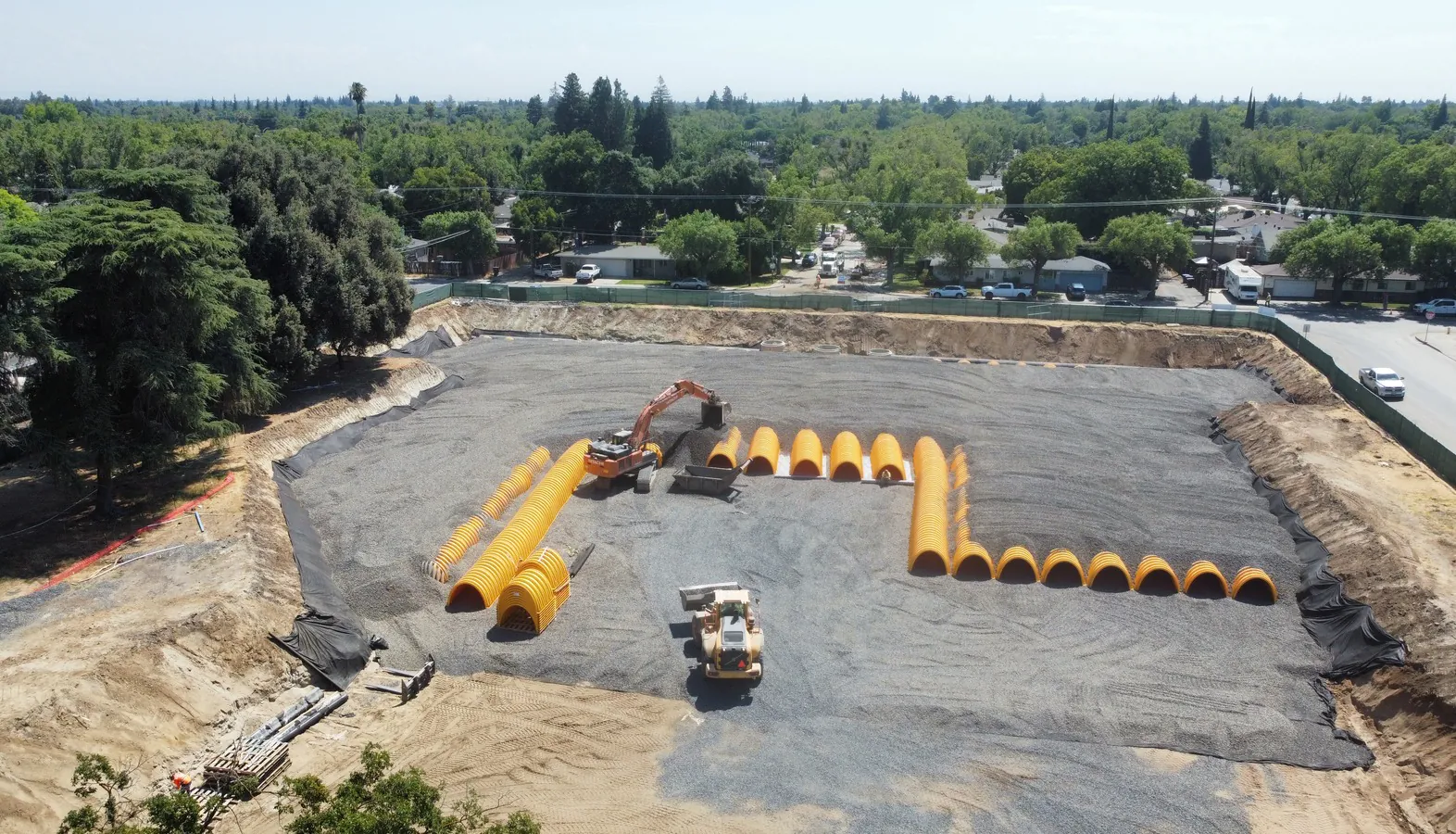
The addition of this stormwater capture project is improving surface and groundwater quality by managing non-point source pollution from a 101-acre catchment, treating stormwater through pre-treatment and natural soil filtration processes, preventing sanitary sewer overflows, and preventing stormwater and raw sewage spills to impaired waterways. The project will also help the City adapt to climate change by providing additional flood protection, allowing groundwater recharge to increase supply flexibility, and reduce irrigation use at the park.
Additional Benefits Realized
Since the city was breaking ground for the installation of stormwater infrastructure, the Water Division took the opportunity to identify existing water mains and services in the area that were a source of frequent maintenance issues due to age, being undersized, and prone to leaking. As such, the project incorporated the installation of more than 4.5 miles of water main, relocation of 245 water service lines from backyards to the street, and the replacement of another 111 water service lines in place. Existing undersized steel pipes were replaced with PVC mains and fire hydrants and systems were also replaced to meet city standards. This aspect of the project helps improve drinking water system reliability, flows, and pressures.