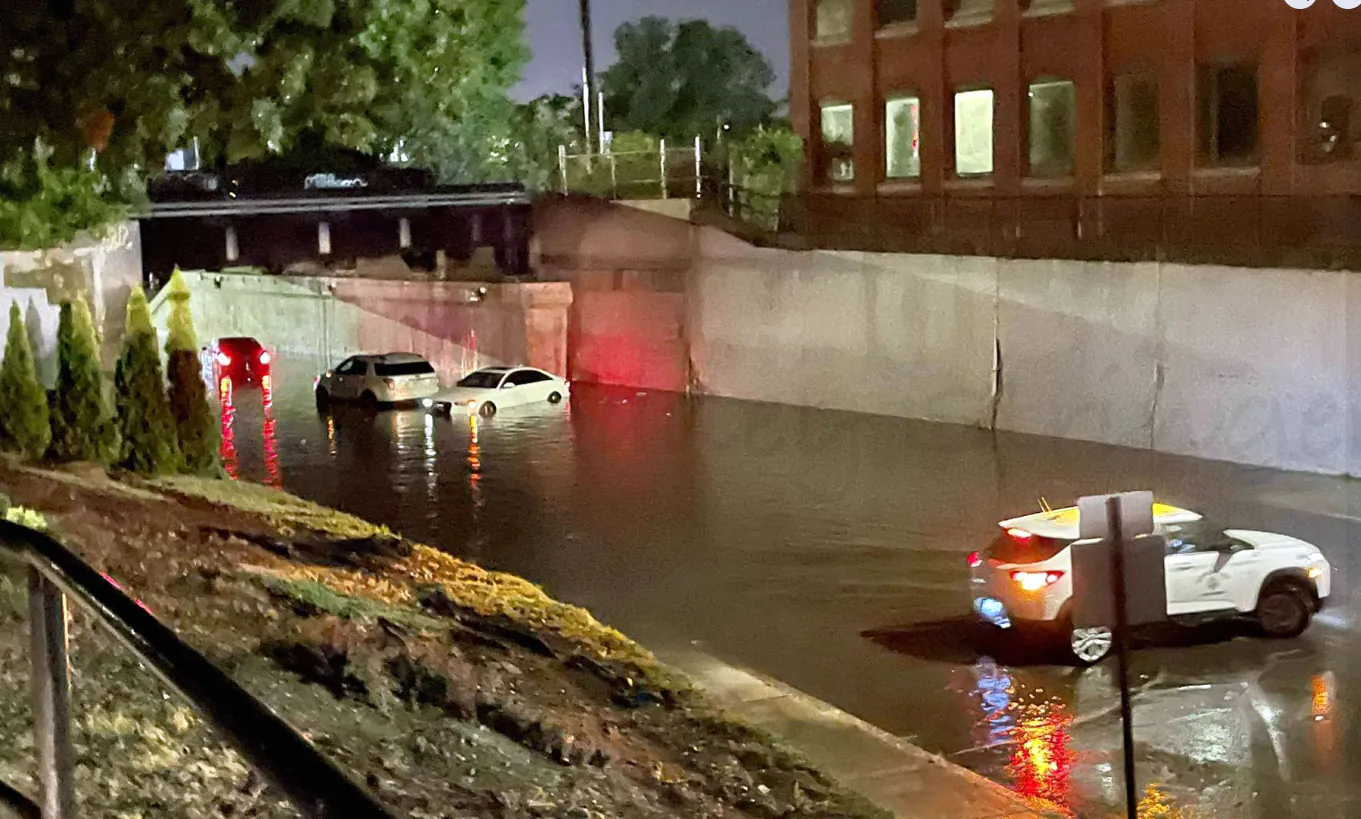
 According to Groundwork Lawrence, three storms dropped 12 inches of rain in August 2023. Just one of those storms accounted for flood damage in 209 homes and a full parking lot with vehicles partially submerged in rainfall. In addition to private residences, businesses and public infrastructure were impacted. The repeated flooding in the city is a pain point for officials, residents, and business owners alike.
Funding a Holistic Approach to Flood Reduction
Woodard & Curran has a longstanding partnership with Lawrence, and city officials came to us seeking help with projects that would curb future flooding. Our experts suggested the city take a more holistic look at existing stormwater infrastructure to identify and prioritize solutions to reduce flooding and combined sewer overflows (CSOs), improve water quality, and increase resilience. We collaborated with the city to define a scope of work for the development of the Green Lawrence Blue Merrimack Stormwater Resilience Master Plan and applied to the Massachusetts Municipal Vulnerability Preparedness (MVP) grant program. The city was awarded $1.6 million for the two-year planning project.
Why comprehensive modeling matters
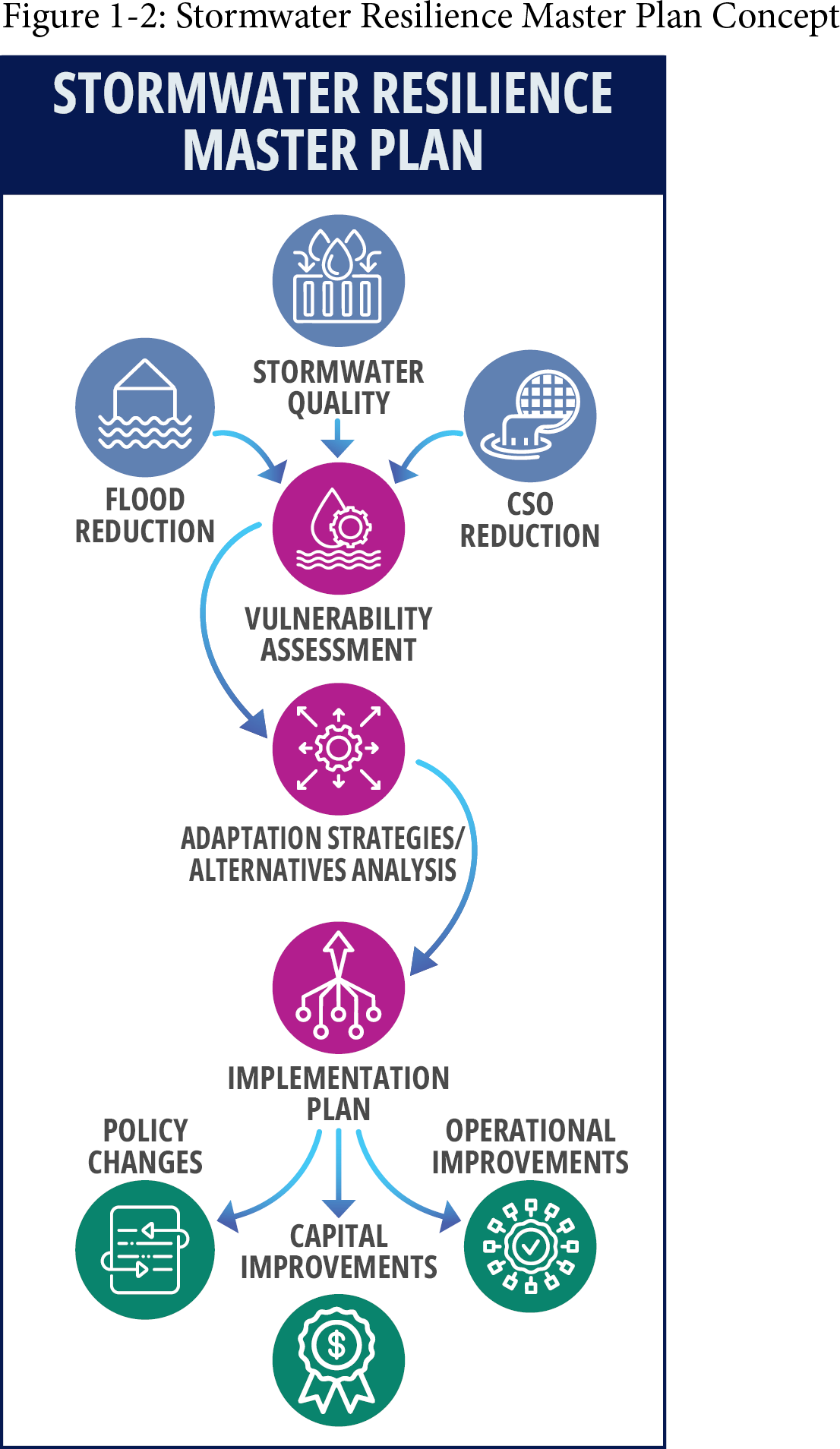 Often, hydrologic and hydraulic (H&H) modeling is completed separately for sewer and stormwater systems, but our stormwater experts kicked off this master planning process with an H&H model of the city’s combined sewer and stormwater systems combined. This provided a more complete picture of how the systems perform individually and together, including what type of storm events could contribute to CSOs and nuisance pluvial flooding. The H&H model was calibrated with 12 months of flow metering data from across the system. In addition to rain gauges installed around the city, Lawrence purchased five Smart Covers to measure water levels in manholes to further calibrate the H&H model.
The calibrated H&H model was then used to identify capacity improvement and green stormwater infrastructure solutions to reduce flooding and CSO events, while also improving water quality. The solutions were evaluated to determine the benefits realized for each approach. The project solutions were further screened and ranked for prioritization purposes. The team also developed cost estimates for each project and implementation plans based on the alternatives analysis and recommended next steps.
The calibrated H&H model has also served as the basis for a live forecasting dashboard that covers a pilot area of Lawrence and pairs the model with weather forecasts in real time. This helps city staff identify the potential for flooding as a storm approaches. If the model and forecast indicate flooding is imminent, it enables the city to proactively place roadblocks and notify residents, or identify short-term solutions, such as cleaning catch basins to reduce potential flooding. The Smart Covers will also help verify and validate the dashboard modeling and provide our team with an opportunity to fine tune the tool.
Identifying capital improvements to reduce flood impacts
As a result of the alternatives analysis, the Green Lawrence Blue Merrimack Stormwater Resilience Master Plan includes several capital improvement priorities, including capacity improvements, green stormwater infrastructure projects, and nature-based solutions that increase conveyance capacity, flood volume storage, and infiltration, or reduce impoundment areas. Many of the flood mitigation alternatives include drainage improvements, such as upsizing stormwater collection pipes, in key areas prone to flooding. Green stormwater infrastructure projects, including a subsurface infiltration basin located in a soccer field or park, bioretention basins, and rain gardens, were also identified as capital improvement priorities.
Identifying funding mechanisms for long-term implementation
In addition to the master plan serving as a guidepost for Lawrence to address persistent flooding, CSOs, and water quality issues, it is a step toward assessing funding mechanisms for long-term, sustainable management of stormwater infrastructure. In addition to the city’s existing water and sewer enterprise funds and leveraging outside funding, such as low-interest state revolving fund loans or grants, the plan evaluated the development of a stormwater utility to address its infrastructure, regulatory, and funding challenges.
The Green Lawrence Blue Merrimack Stormwater Resilience Master Plan identifies the city’s biggest stormwater issues, outlines an approach to address the issues, and substantiates the city’s need for capital investment in stormwater infrastructure. It provides a roadmap for the city and will help garner voter support for critical projects that reduce the financial impact major storms currently have on the city. Together, the city, Groundwork Lawrence, Woodard & Curran, and our other project partners developed an integrated, prioritized plan that will help protect residents, businesses, and waterways while positioning Lawrence to make strategic investments in resilience for years to come. Already the plan has helped the city secure another MVP grant for $1.1 million to advance the design of an identified flood mitigation project and determine the feasibility of establishing a stormwater utility.
