Ashland Inc.

Wildlife Habitat Council Program Management

Achieving high WHC standards for a global additives and specialty ingredients company

Woodard & Curran’s environmental planning & permitting experts have supported Ashland Inc. and affiliates’ Wildlife Habitat Council (WHC) Certification Program since 2020, supporting conservation programs distributed nationally across eight sites. As of 2026, seven have achieved gold certification, and the eighth has achieved silver while keeping program costs consistent.

Woodard & Curran’s environmental planning & permitting experts have supported Ashland Inc. and affiliates’ Wildlife Habitat Council (WHC) Certification Program since 2020. With conservation programs distributed nationally across eight sites and consisting of over 70 unique projects, our approach combines close collaboration with onsite personnel and innovative data acquisition, management, and analysis to optimize Ashland’s contributions to biodiversity and the communities where they operate.

Programmatic approach optimizes investment

The sites included in Ashland’s WHC program include former and current plant locations and the company’s corporate campus/headquarters. While each site presents unique opportunities and challenges, our team has taken a programmatic approach to managing the client’s sustainability investments.

Our objective is to maximize program value and investment impact by helping Ashland define its WHC Certification Program goals and working directly with onsite personnel to achieve them. In collaboration with the company’s remediation managers, we developed a tailored plan to meet the highest levels of WHC certification for each individual site. As of 2026, seven have achieved gold certification, and the eighth has achieved silver while keeping program costs consistent.

Through the WHC Certification Program, Ashland has engaged in numerous habitat conservation and wildlife monitoring activities. Some examples include:

/

Avian Nesting Boxes

Nesting boxes provide migratory birds with a secure place to build a nest, lay eggs, and raise young.

Native Vegetation Planting

Native planting programs support habitat enhancement for a wide range of animals, and pollinators which particularly benefit from native wildflower meadows.

Acoustic Bat Monitoring

At one site, the number of bat species documented via acoustic monitoring has tripled since WHC activities began — confirmation that habitat protection programs are working.

Ongoing optimization

Implementing conservation initiatives across numerous sites has been streamlined through the ongoing identification and application of programmatic efficiencies throughout our partnership with Ashland. Before all sites were brought under a singular program structure, data collection and management tools and methods varied.

Woodard & Curran has standardized these processes, leveraging ArcGIS tools to enable mobile data collection and/or management at each site. Data management and visualization tools allow Ashland to better track and share program progress and success to shareholders. We coupled this with directing efforts toward higher-value projects, prioritized using our deep understanding of how projects are scored. Overall, these optimization efforts streamline program management and reduce the annual cost per project and site.

We collaborate with Ashland’s site consultants to further the use and management of the Microsoft Teams portal and ArcGIS-based digital data collection processes, conduct data quality reviews and data analysis to establish year over-year project success trajectories. Drawing on the data collected by program team members and in collaboration with Ashland, we support ongoing communications and annual reporting

Outcomes Achieved

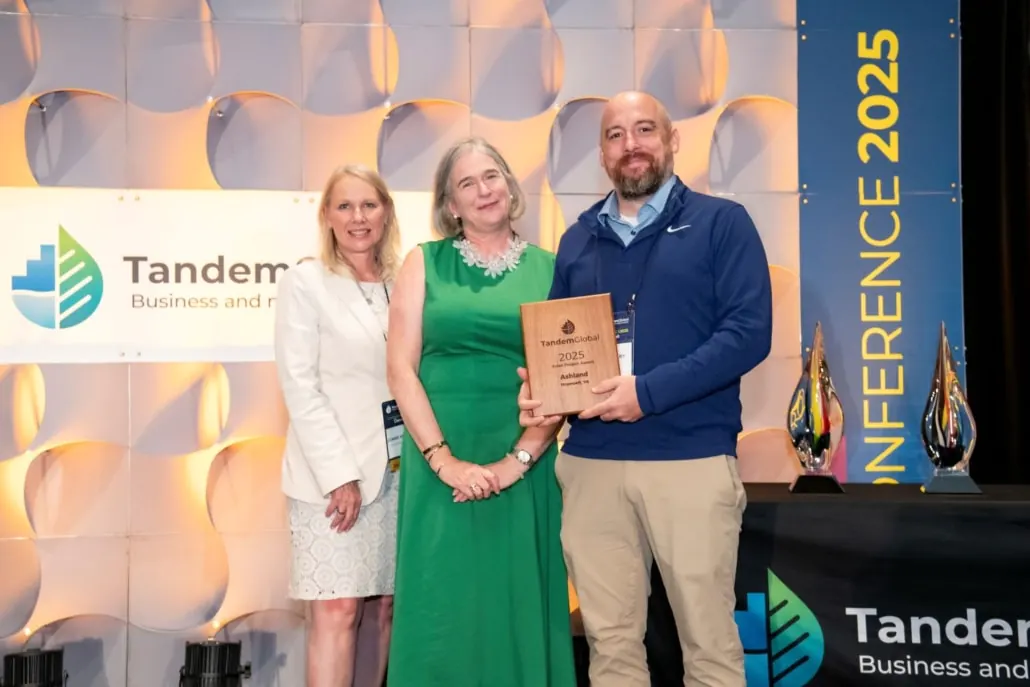
The programmatic approach has optimized Ashland’s contributions to biodiversity and the communities in which Ashland works, resulting in the achievement of the highest certification tiers at Ashland WHC sites. The client’s initiatives have been recognized with several industry awards and featured in white papers published by Tandem Global (the organization that powers WHC certification).
Moreover, our partnership has enabled Ashland to achieve and promote its core ESG objectives. Optimized data collection and management around the activities central to the company’s WHC-certified sites bolster Ashland’s commitment to transparency and quantifiable impact when it comes to sustainability.

Project Team

Lora Sterner PWS, CSE Senior Technical Manager Community Development
Emily Lynch Project Scientist Remediation
Scroll back to top of the page