Many municipalities recently wrapped up a difficult budget planning cycle for Fiscal Year 2026-2027. We hear from our clients that managing their stormwater infrastructure has become increasingly difficult when competing against other budgetary needs. Sometimes, because stormwater is wrapped up in other city utilities or services, it is a struggle to identify how much is spent on stormwater infrastructure or estimate how much is needed for improvements. This also makes it hard to enumerate the value of stormwater management to their community.
Earlier this year, we talked about establishing stormwater utilities is a path forward for municipalities to create dedicated funding to this critical work. However, if a city can’t articulate the scope of their stormwater system, budget for ongoing maintenance, and demand for additional infrastructure, it is hard to garner the public support to implement a fee like water or sewer rates residents already pay.
Why Do Stormwater Master Plans Matter?
That’s where our work on stormwater master planning plays a valuable role. When we partner with a municipality to develop a stormwater master plan, we aim to provide a clear view of the stormwater system, prioritization of investments, impacts of climate change through comprehensive modeling, and a funding approach to turn the plan into action. Wrapped up in the planning process, we work with our client to execute public education and outreach, so residents learn the value of stormwater management and start to build support for a utility model.
We are currently collaborating with several Floridan municipalities on their stormwater master plans and have recently submitted complete plans to the cities of Santa Rosa, California and Lawrence, Massachusetts.
Prioritizing investments in an aging system
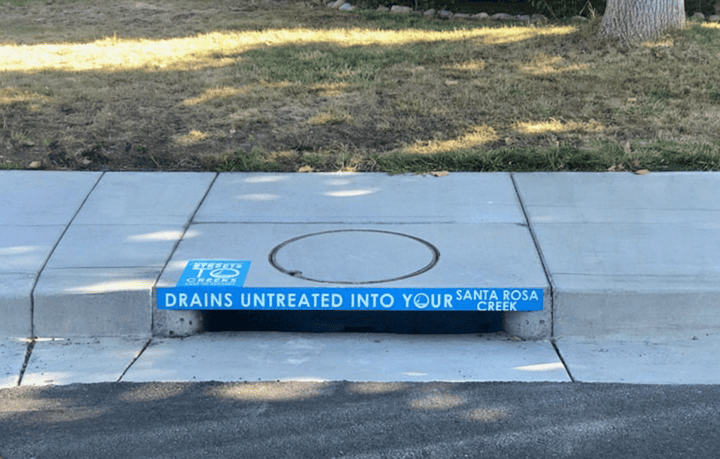 Storm drains have an estimated useful life of about 60 years. For Santa Rosa’s storm drain system, for which construction began in the 1950s, consists of more than 28,000 inlets, 2,040 Low Impact Development (LID) features, and 530 miles of public and private storm drains leading to over 100 miles of creeks. Approximately 8 percent of the system has exceeded its life expectancy, and an additional 15 percent will soon. During severe storm events, the system is overwhelmed and the failing infrastructure exacerbates flooding. Meanwhile, the storm drain infrastructure, operations, and maintenance receives only 12.7 percent of the city’s capital facility fees, which fluctuates based on development, and 3 percent of the city’s gas tax.
The Santa Rosa Storm Drain Master Plan we developed encompassed four key objectives:
- Prioritize safety through maintaining storm drain infrastructure
- Manage flood risk through projects and strategies
- Compliance with the city’s NPDES permit
- Strengthening system resiliency through maintenance and operation
Our stormwater experts worked together to assess system conditions, conduct a hydrologic and hydraulic analysis, identify risks to the community, make recommendations for resiliency, and identify funding options to execute the plan. The final document compiles all that information into a graphics-forward, user-friendly report for the city and its residents.
Modeling a more resilient future
In the historic mill city of Lawrence, they’re dealing with stormwater infrastructure that is more than a century old, predating modern design standards. Rain or snowmelt is conveyed via 185 miles of pipe, varying in size, shape, and material, 140 miles of which is part of a combined sewer system that also conveys sanitary flow to the Greater Lawrence Sanitary District Wastewater Treatment Plant (WWTP). The remaining 45 miles of pipe is part of a separated stormwater collection system that discharges to the Merrimack, Spicket, and Shawsheen Rivers.
A single storm event in August 2023 caused more than 200 homes and numerous businesses to flood, in some areas more than four feet deep. Woodard & Curran has a long-standing relationship with the city and we encouraged them to develop the Green Lawrence Blue Merrimack Stormwater Resilience Master Plan to not only identify projects that would relieve future flooding, but also improve infrastructure based on climate modeling.
Funded through a $1.6 million Massachusetts Municipal Vulnerability Preparedness (MVP) grant, this project tackled some of Lawrence’s most pressing infrastructure and resilience challenges, bringing together flooding mitigation, combined sewer overflow (CSO) reduction, and stormwater quality improvement into a single, comprehensive strategy for the future. The resulting plan evaluates 20 alternative adaptation strategies, including gray and green infrastructure projects, using hydrologic and hydraulic models, schematic design, cost estimation, and a multi-criteria benefit-cost comparison. As part of the project scope, our experts also developed a real-time model and dashboard that combines hydrologic and hydraulic data with weather forecasts so the city can determine where potential flooding might occur if a heavy rain event is predicted.
Turning plans into public support and action
Stormwater master planning gives municipalities a technical roadmap and provides a foundation for informed decision-making, transparent communication, and long-term investment. By documenting system needs, evaluating future risks, prioritizing projects, and identifying funding strategies, communities can make a stronger case for the resources required to protect the community. Whether the challenge is an aging storm drain network, more frequent flooding, or the need for a dedicated funding model, a well-developed master plan helps communities move from reactive repairs to proactive resilience, and sets the stage for establishing a stormwater utility.
